After a long, hot summer, your trees might not look quite the same as they did a few months ago. Brown leaves, early leaf drop or dead-looking branches can all be signs that a tree has been under stress.
Some of these changes are simply part of autumn. Others can indicate that a tree has struggled with heat, drought or another underlying problem.
So, how can you tell the difference between natural seasonal change and heat damage – and when should you get advice from DH Tree Services?
How can summer heat affect trees?
Trees need water to grow and stay healthy. During hot, dry weather, moisture can be lost more quickly than the roots can replace it, particularly if the soil has been dry for a prolonged period.
Young and newly planted trees can be especially vulnerable because they have smaller, less established root systems. Trees growing in exposed locations or poor, compacted soil may also be more susceptible to drought stress.
The effects aren’t always immediately obvious. A tree can continue to look relatively healthy during a period of hot weather before showing signs of stress later in the season.
Signs your tree may have suffered heat stress
As autumn approaches, keep an eye on your trees for changes that could indicate they’ve struggled with the summer weather.
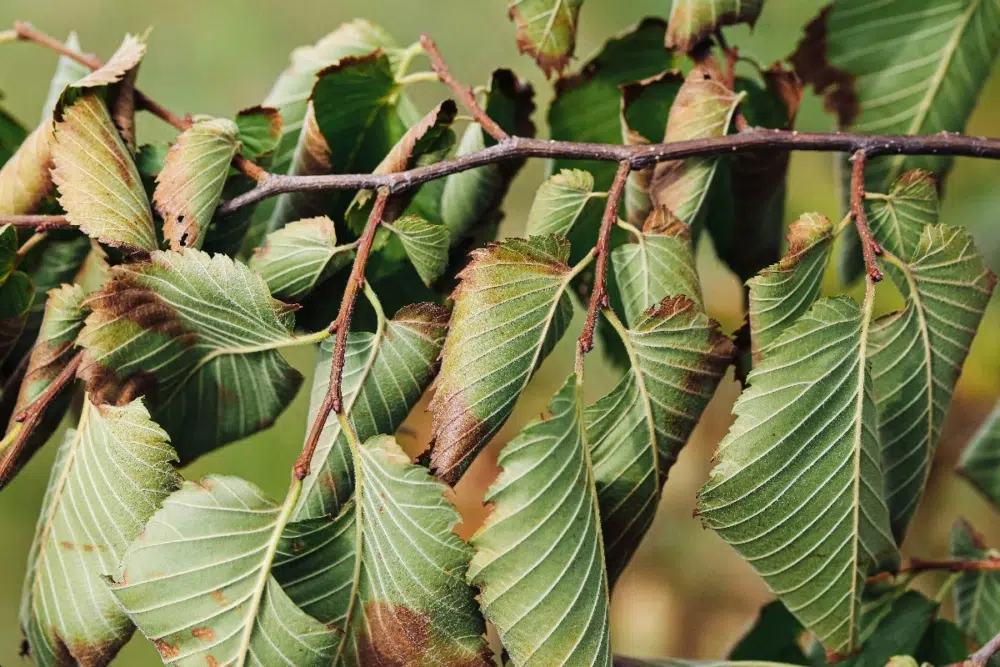
Brown or scorched leaves: Dry, brown or crispy leaves can be a sign that a tree has struggled to get enough water. You may notice browning around the edges or leaves that appear scorched. However, it’s important not to assume that every brown leaf is the result of summer heat. Autumn naturally brings changes in foliage, and pests or disease can produce similar symptoms.
Early leaf drop: Some trees respond to prolonged drought by shedding leaves earlier than normal. This reduces the amount of water the tree loses through its foliage. If a tree is losing large numbers of leaves while other trees of the same species still look healthy, that can be a red flag.
Dead or dying branches: Dead twigs and branches can be a sign that a tree has been under stress. Look for branches with little or no foliage, brittle twigs or sections of the tree that appear to be dying. There can be several reasons for this, including heat stress, disease, pests or problems with the roots. If you’re concerned, DH Tree Services can assess the tree and help identify the cause, rather than simply cutting away the affected branches.
Cracked or damaged bark: Damaged or cracked bark can have several possible causes, but if you’ve noticed splits, loose bark or unusual areas of damage on the trunk or larger branches, it’s worth having the tree assessed rather than assuming it’s simply weather-related.
Less new growth: Prolonged periods of dry weather can affect a tree’s ability to produce new shoots and foliage which is often a sign that something isn’t quite right.
Why check your trees in autumn?
Autumn is a good time to assess your trees before winter brings its own challenges. Once you’ve noticed changes in the foliage, take a closer look at the whole tree. Do you see any of the warning signs above, or any other evidence of disease or pests?
At DH Tree Services, tree health assessments can help identify potential problems and advise you on whether any work is needed. If a tree has become damaged or poses an immediate risk, the team also provides emergency tree services.
What can you do to help a heat-stressed tree?
If you’ve noticed signs of stress, avoid immediately reaching for the secateurs. Removing branches without knowing why they’re affected may not solve the underlying problem.
If the weather stays dry, giving your trees some extra water can help, particularly if they’re young or newly planted. Established trees are usually better able to cope, so don’t assume that more water is always the answer.
Keeping an eye on your trees and dealing with any problems early can also help prevent small issues from becoming bigger ones. If you’re unsure what your tree needs, a professional assessment can take the guesswork out of it.
Care Tips for Heat-Stressed Trees
To support trees that have experienced heat stress, it’s essential to provide them with adequate water. Deep watering is preferable, as it encourages roots to grow deeper into the soil. Aim to water early in the morning or late in the evening to minimise evaporation. Additionally, applying a layer of mulch around the base of the tree can help retain moisture and regulate soil temperature, promoting healthier growth.
Monitor the tree for any signs of pests or disease, as stressed trees can become more susceptible to infestations. Regularly inspect the foliage and branches for unusual spots or webbing. If you notice any concerning symptoms, consult a professional for advice on the best treatment options to ensure your tree recovers and thrives.
Tree care for Surrey, Sussex and Kent
If you’re concerned about a tree that’s struggled through the summer, DH Tree Services can assess its health and recommend the right course of action. From pruning to tree removal, the team provides professional tree services across Surrey, Sussex and Kent.
Concerned about a tree on your property? Contact DH Tree Services for expert advice.